Does anyone remember when we discussed the new subscription model two years ago?
I'd like to start a discussion that's not entirely serious and is intentionally worded provocatively. So please don't take offense.
The developers promised continuous development, a constant stream of new features, and so on. So what have we got after two years?
I'm now faced with the question of whether to continue paying for another year of the subscription or not.
My impression (which may be wrong) is that we've received tons of bug fixes and minor enhancements.
But: I haven't seen any truly new features – have I missed something?
Yes, I’d say quite a few .
But seriously that's subjective and tied to how much you're able to get out of Opus. If you use it like Windows Explorer, then yes, that would be the case.
Personally (since I use a lot of scripting and other programatic stuff), over these past two years it has received a ton of great features.
I have the same sense as the OP that we have received many useful refinements around the edges - bug fixes and minor enhancements - but: no truly new features as was the case with Opus 13.
I would offer a caveat, a consideration and a concern.
The caveat is Opus 13 was a more than two year project so perhaps we should wait a few years to assess the current updates pace.
The consideration is that Opus is a mature product in the file manager space, nothing else comes close in power and customization, so transformative new features are unlikely or involve more complex processes and cater to a smaller user pool. Would this be a truly new feature?
The concern is over the possibility of bloat in a heedless search for the truly new feature. Would an AI-assisted voice activated Opus be a truly new feature? Would you want it?
Evaluator functions have been a gamechanger, opened up more scripting angles, and qualify as a major upgrade in my book.
That said, part of the subscription model is not waiting for a single big bang every few years. It's about continuous development and frequent iterative releases of small enhancements that might not otherwise arrive until the next "major" upgrade.
Remember v13 was released 7.5 years after v12. I'm not sure I want to wait another 7.5 years for the next big bang...
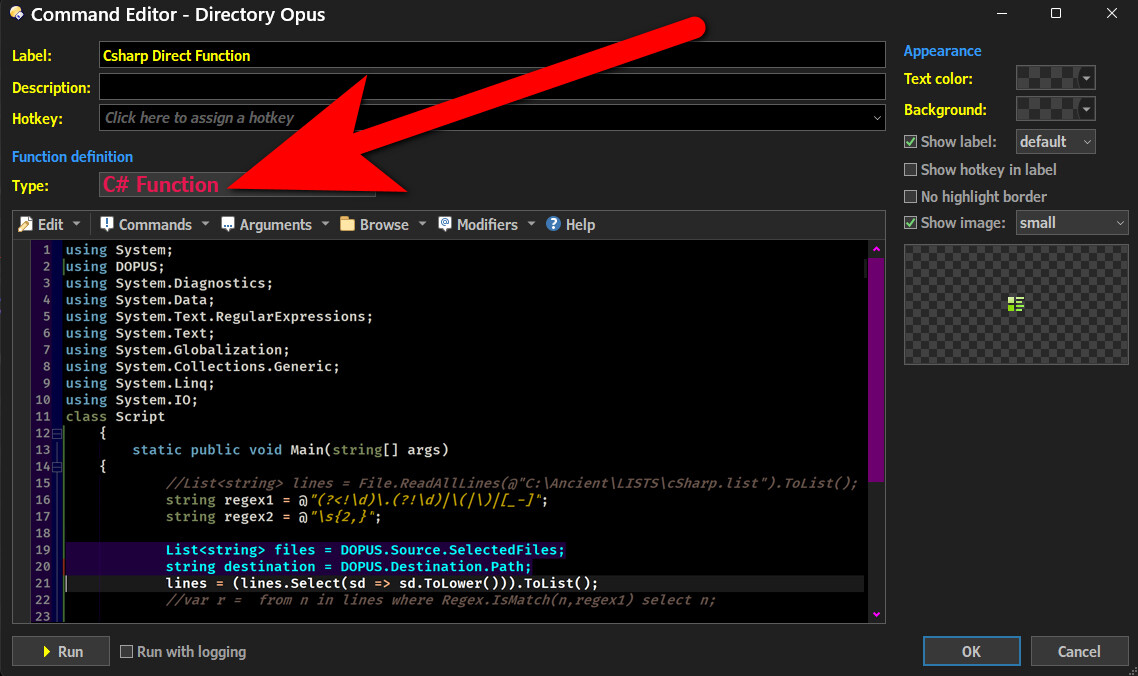
A feature I would like to see is integrated c# scripting for button functions that runs without compilation (.net 10 supports it), or like CS-Script.
The reason being is that vbscript is now deprecated in windows 11.
Having the option to use c# code inside a button seamlessly would be unprecedented.
Passing selected files/folders as an array into a c# script without relying on external .cs files, well Dopus just lapped the competition and is now light years ahead.
That would be a killer feature. C# integration is inevitable for Dopus, it just makes perfect sense...
Similarly, I am waiting for the new FTP engine. Two years have passed, and DOpus still does not support enhanced cryptography in current releases of Linux-based systems, such as Ubuntu.
Part of the problem with the old system of monolithic updates (ending with but including 13.0) was that a major release dropped multiple years of features/development all at once, which then resulted in a long period of refining those new features based on user feedback. That in turn meant less time working on new things during that period.
It's less efficient to write something, put it in a vault for 3-5 years, then release it and then pick it up again to make changes and additions people asked for that we hadn't thought of ourselves. Doing that with 100s of new features at once makes it even worse.
We'd still put out lots of small updates during that period, but they were mostly focused on the features the big update had added; improving them, and extending them to work in more ways/areas. Most of the larger changes would happen later, after that was done and we had time to re-focus.
The same was the case with every other major update, it was just hidden as you couldn't see what was being worked on and when. It was typically a couple of years after a big release before we started on the next big release.
This affected 13.0 as well, as it was a monolithic release. With things settled down after that, we now have a shorter, smoother cycle for development, release, feedback and refinement.
The main problem I see with the post 13.0 system is the lack of fanfare about releases, where you only know what we've added if you reed the release notes. There have been a lot of changes made in the last 2 years, but you have to read about them to know. I'd like to get back to doing more regular "what's new" videos to help with that, but only after the SFTP work is done.
I'm also waiting for smooth zooming in the image viewer, as I suggested in this.
While DOpus isn't a dedicated image viewer, the current zooming is quite laggy. Since the built-in viewer is the only way to browse images while maintaining the Lister's custom sort order, improving its performance is essential. Luckily, I haven’t been waiting for too long yet... though I’m not sure when we'll see the optimization.
But I still appreciate the many useful updates we've seen in 13, like the Evaluator and the QUICKSHOW—they are truly useful.
Dude, Quickshow is HUGE feature, to some, this feature alone is worth the cost of entry. Also didn’t expandable folders make this release? Quickshow and Expandable folders, these two alone make DO worth 10x its asking price (to me), also have to consider no other file manager on Windows platform have these features.
I'd like to see a single web page with a running list of updates in chronological order. The data could be pulled from each separate beta. A single page would make it easier to see the breadth of development and to do word searches for specific features.
@Chuck , I have been seeing all the improvements to the "Evaluator" function, and completely reveling my dumbassedness here, I have zero clue what it is or how it is used. I know it's not your responsibility to do t his, but you're the first person to report their liking of it that I've come across, can you give me some examples of what you have done with the Evaluator that makes it really special? I want to use this program to the best of its ability and just don't understand/would like to see what it can actually do?
 .
.